Reconnecting waste
Digital design for circular construction
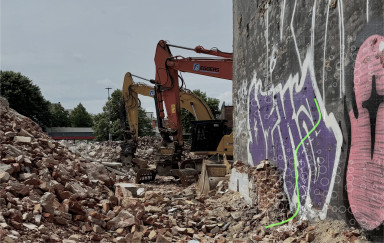
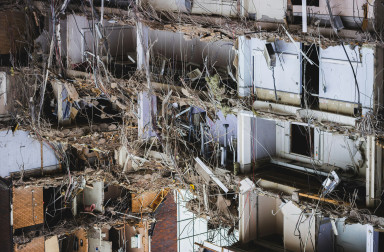
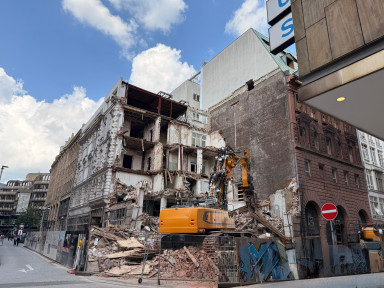
Germany generates nearly 200 million tonnes of construction and demolition waste (CDW) each year, with brick and concrete representing over a quarter of this total. While reported recovery rates are high, reclaimed bricks are often downcycled into aggregates, losing both their structural potential and cultural value.¹ This project connects research on recovery conditions in Hamburg with responsive design strategies for damaged and irregular bricks. By adapting existing computational tools, it investigates how connecting geometries can accommodate different brick arrangements.
- circular built environment
- construction and demolition waste
- brick reuse
- responsive design
- digital fabrication
Context
Construction and demolition waste (CDW) has become a defining challenge for sustainable cities and is often described as a technical problem of logistics or recycling. Bricks, as one of the oldest and most widespread building elements, often lose their reuse potential because of mortar residues and breakage. This leads to approaches often prioritizing recycling or downcycling, and therefore to significant energy and resource losses.² The project explores how these very characteristics can open up architectural design opportunities by examining the information, preparation, and fabrication required for alternative reuse strategies that embrace irregularity.
Aims
The four core objectives of this research are to:
- Understand the practices and institutional conditions shaping material recovery and reuse in Hamburg
- Identify the information needed to support selection, connection, and design decisions
- Develop and evaluate adaptable connection strategies for damaged bricks using existing digital tools
- Produce transferable design knowledge and a documented method that makes its requirements, applicability, and limitations explicit
Research design
Interviews, documents, and site observations inform an investigation combining material documentation, digital modelling, and selected physical prototypes. Design studies examine how connection strategies respond to changing material inputs, assessing assembly feasibility, added material, and manual adjustments. The methodology treats prototypes not as finished products, but as test situations where feasibility, values, and barriers are negotiated.³ Inspired by precedent works demonstrating how 3D scanning and parametric workflows can adapt digital tools to damaged materials,⁴ and by extending this logic to brick waste, the research frames reuse as a process shaped by material and social negotiations.⁵
Supervisors: