Openness as public, as generosity, as porosity, as appropriation, as climatic condition, as trust, as closure, as process, as discomfort: What architects can learn from the arts, squatters, and existing buildings
German Society for Design Theory and Research (DGTF) Conference 2026, ‘Shifting Regimes, Changing Orders’, Goethe University, Frankfurt am Main, 25–26 June 2026
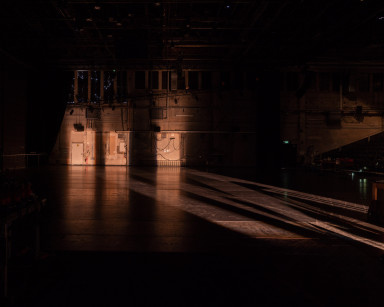
The paper presentation explored how designing with and for heterogeneous openness could help resist normative standards of spatial programming and regulatory frameworks, and thereby create more generous spaces for appropriation, encounter, and the negotiation of differences. The presentation empirically examined the spatial transformations of the Kampnagel theatre in Hamburg and critically questioned what architects mean when they speak of ‘openness’ of space. Using examples of openness as climatic porosity, as spatial appropriability, and as aesthetic discomfort, the term is examined in ambivalent spatial conditions through various material dimensions and how they arise or are produced. The presentation argues that recognizing the heterogeneity of openness is essential for designing ‘open’ spaces, and that this can, in turn, contribute to a more precise and nuanced architectural methodology. Heterogeneous openness is thus understood as a spatial quality defined less by a specific architectural form than by the allowance of spatial, programmatic, and temporal instabilities and interdependencies.
More information
https://dgtf.de/calls/dgtf-conference-2026-shifting-regimes-changing-orders