01 Dec, 2026, 17:00Auditorium, HCU
Prof. Dr. Cordula Kropp (University of Stuttgart)
Constructive Technopolitics: Why we build the way we build
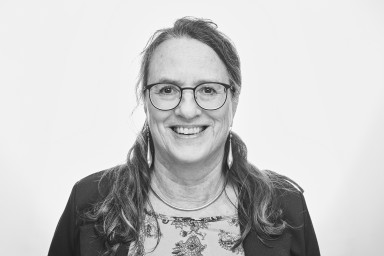
Image © J. Altmann
Abstract
Housing construction shapes everyday life and has enormous social and environmental impact, yet dominant norms and routines governing it continue to produce profound environmental damage and social inequality. But why do we build the way we build? This talk will explore how innovation models relevant for housing construction are channelled through ‘infrastructured agency’. Conceptually, it builds on infrastructuring as a technopolitical strategy through which dominant actors stabilize specific socio-material assemblages in housing construction while constraining alternative ones. Empirically, it compares post-war innovation models in German housing construction, mainstream models in today’s construction industry, and community-led initiatives, based on document analysis and expert interviews. The comparison reveals the construction industry’s infrastructural power across discursive, institutional, and industrial standard-setting layers that reinforce socio-material obduracy within powerful construction regimes. By advancing our understanding of how technopolitics underpins the durability of socio-material assemblages, the talk will point to possible starting points for a building policy aimed at sustainability and justice.
Bio
Cordula Kropp is a professor of sociology at the University of Stuttgart and, in autumn 2026, a fellow at the Humanities Centre for Advanced Studies ‘Futures of Sustainability’ and the Hamburg Institute of Advanced Studies (HIAS). At the University of Stuttgart, she heads the Chair of Sociology of Technology, Risk and Environment, and is also the director of the Centre for Interdisciplinary Risk and Innovation Research (ZIRIUS).
Her work and research focus on processes of sociotechnical and socioecological transformation, particularly in the context of current infrastructure transitions (construction, energy, and mobility transitions; digitalization and automation), as well as the conditions and opportunities for shaping them democratically on the path toward a just and sustainable society. Cordula is the lead PI for Social Sciences in the ‘Integrative Computational Design and Construction for Transformative Architecture’ (IntCDC) Cluster of Excellence and a member of Germany’s National Academy of Science and Engineering (acatech).
Reference for the talk: Kropp, C. (2026) Constructive technopolitics: infrastructure, agency and socio-material obduracy in German housing innovation. Territory, Politics, Governance. https://doi.org/10.1080/21622671.2026.2716250